
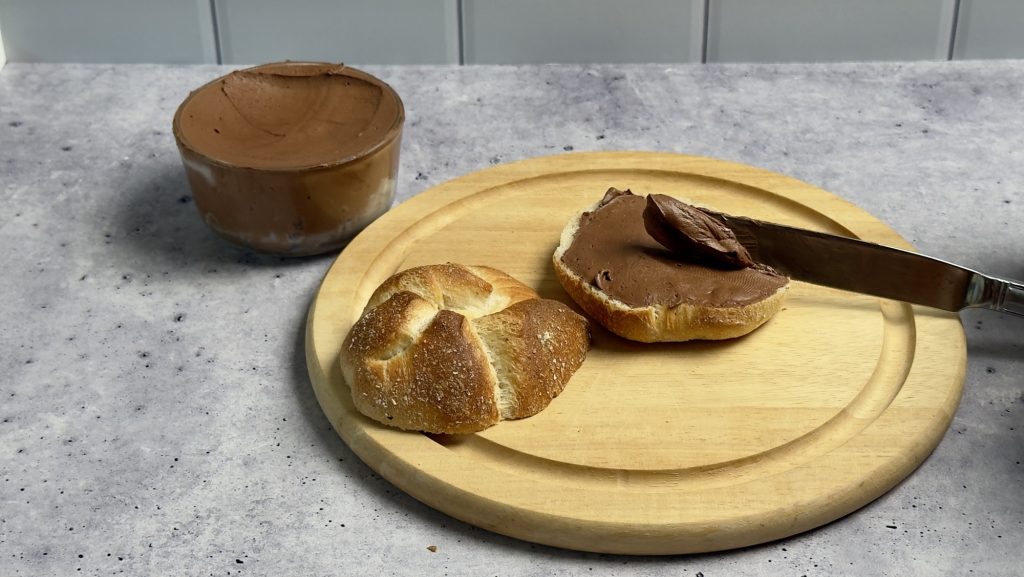
When my dad was in hospice, chocoladeboter en keizerbroodjes was one of the things he asked for, alongside a run of far less predictable requests, butter chicken with naan one day, a McDonald’s order down to the strawberry milkshake another. It wasn’t some austere last request built around nostalgia alone, he just wanted the food he wanted.
I went looking for Choba, the chocoladeboter made by Brinkers, the one that’s been on Dutch shelves since the 1950s, that I would eat as a kid, and my parents always had at home when I came to visit as an adult. It wasn’t at that store, or the next one. It turns out Brinkers had quietly pulled the plug on it. Fine. If you can’t buy it, you make it. So I mixed my own, butter, sugar, and cocoa on the counter, guessing at ratios from memory, then went out myself to a warme bakker for a proper keizerbroodje to go with it. What’s below is the version of that I’ve settled on since.
The original Choba was made with margarine, the way most Dutch bakery-style spreads are. I use real butter instead, partly because that’s what I had open on the counter that day, and partly because I think it tastes better once you’re not trying to match a factory product exactly. The two work at the same ratio if you’d rather use margarine yourself, this isn’t a recipe that needs real butter to succeed, it’s just the direction I went.
Brinkers actually put out the story behind Choba when they announced it was going away. They developed it in the 1950s, taking inspiration from an Italian spread, and it stayed on Dutch shelves for 77 years before the company retired it in 2026 in favor of a vegan replacement. That’s most of a century of Dutch kids growing up on this exact spread, spread thick on a keizerbroodje for breakfast or packed into a school lunchbox, which is part of why losing it felt like a bigger deal than a single discontinued product usually would.
Done right, chocoladeboter should be firm enough to hold its shape when you scoop it with a knife, then soften the moment it touches warm bread. It’s not as sweet as Nutella, and there’s no hazelnut in it, just butter, sugar, and cocoa, so the chocolate flavor comes through direct, a little closer to eating good dark chocolate ganache than a hazelnut spread. It’s also not trying to be dessert. It’s meant to sit on bread every morning, which is a different job than a jar of chocolate spread has in most American kitchens.
This one takes about 20 minutes total, most of it hands-off while the cocoa blooms, and no cooking beyond melting a little butter, which makes it the easier half of the two recipes that came out of that day. If you’re making the keizerbroodjes to go with it, that recipe is posted separately, and both come from the same video.
Before you scroll to the recipe
If you make this, come back and leave a star rating below. It helps the next person searching for chocoladeboter actually find this page.
Want the roll to go with it? Keizerbroodjes are a great accompaniment, and are posted in the same video, but has its own recipe here.
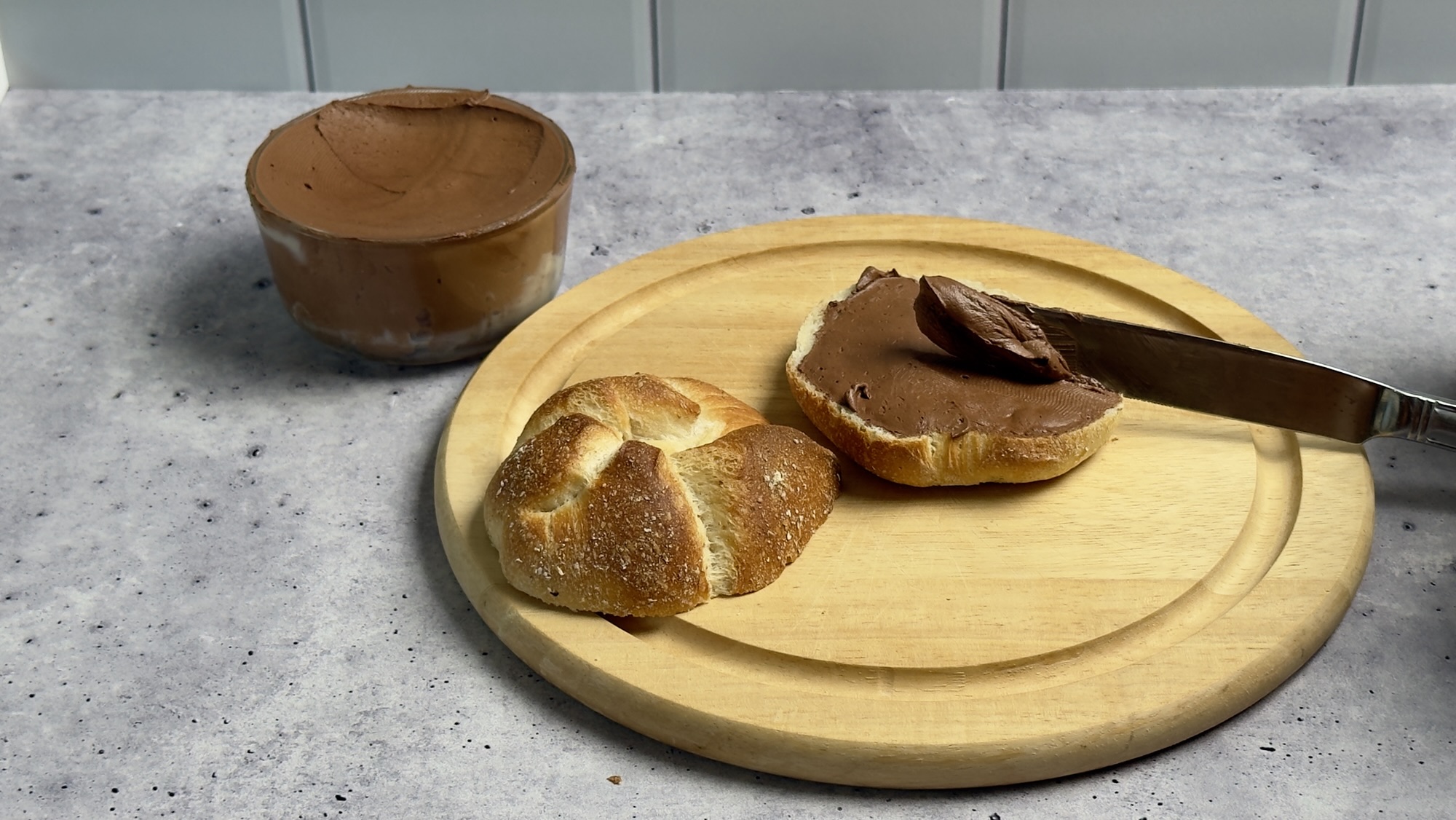
Chocoladeboter (Homemade Chocolate Butter)
Ingredients

Equipment
Method
- Melt the 30g portion of butter until fully liquid. Whisk in the cocoa powder to form a smooth, thick paste with no dry lumps. Let sit at room temperature for 10 to 15 minutes to bloom, this pulls more flavor out of the cocoa than stirring it straight into soft butter.
- Add the remaining butter, powdered sugar, and salt to the bloomed cocoa paste, and beat with a hand mixer or whisk until smooth and fully combined. Go slowly at first, since the sugar can puff up.
- Scrape into a small container and refrigerate until it firms up to a spreadable, slightly stiff texture, similar to a block of Choba.
Nutrition
Notes
- Only a third of the butter is melted for the bloom, the rest stays soft, so the final texture still firms up properly rather than staying too soft from too much melted butter.
- The original this is based on uses margarine. Real butter is used here for flavor, but the two work at the same ratio if you’d rather use margarine. The small pinch of salt balances the sweetness the way the original does with margarine’s own flavor.
- This spread is firmer than a typical American frosting, meant to hold its shape on a knife. If it turns out too soft, it usually just needs more time in the fridge.

My son is 6 and this was the first recipe he could actually do most of himself. Blooming the cocoa first seemed fussy until I tasted it, now I get why you do it that way. We brought a container to my dad, who ate this growing up in the Netherlands before the family moved to Australia when he was in his teens, and he said it was exactly right. He has strong opinions about this stuff so that meant something. Not nearly as sweet as the spreads we’re used to here, and it firmed up just like you described.
Sorry to hear about your father. I’m glad you posted this.
Blooming the cocoa is the step that looks skippable and isn’t. A six year old and a dad who grew up on it both signing off is about as good as it gets. Thank you for the kind words about my father.