

A Taste of Home: My Oma’s Draadjesvlees
Some dishes aren’t just meals—they’re memories. Every time I make draadjesvlees, I’m transported back to my Oma’s warm kitchen. The rich, savory scent of slow-braised beef filled her home. It wrapped us in comfort long before we even took the first bite.
Growing up, Sunday afternoons were special. The world outside was cold and gray, but inside, my Oma’s stovetop simmered away for hours. She transformed a simple cut of beef into something magical. She would start early in the day. She hummed softly as she browned the meat. This filled the air with the first delicious hints of what was to come. By dinnertime, the beef was so tender it fell apart with the mere touch of a fork. Its deep flavors melded perfectly with buttery mashed potatoes.
This dish, once a staple of Dutch working-class kitchens, has stood the test of time, and for good reason. It’s hearty, packed with flavor, and made with love.
The History of Draadjesvlees
Draadjesvlees has been a beloved dish in the Netherlands for generations. Traditionally, it was a way to make the most of cheaper cuts of beef. These cuts were tough and required slow cooking to become tender. Dutch grandmothers, like mine, mastered the art of patience. They cooked the meat low and slow. The meat practically melted into flavorful strands.
In the old days, this dish was a staple in households where food had to be simple yet satisfying. Families would gather around the table after a long day of work. They would fill their plates with steaming hot draadjesvlees. It was often served with mashed potatoes and a spoonful of tangy rode kool (red cabbage) or apple compote. The stew was seasoned simply. It included bay leaves, vinegar, and maybe a hint of nutmeg or cloves. This allowed the beef and slow cooking to do all the talking.
Over time, the recipe has evolved. Some modern versions include wine, beer, or even sherry, but my Oma’s version was pure and classic. She only kept alcohol in the house for birthdays and special occasions. I don’t think I ever saw her cook with sherry!
My Oma’s Secret Ingredient
One of the things that made my Oma’s draadjesvlees so unique was her secret ingredient: ontbijtkoek (Dutch spiced breakfast cake). This soft, gingerbread-like loaf added a subtle sweetness and warm spice to the dish, making the sauce rich and velvety.
I can’t easily find ontbijtkoek in American grocery stores. So, I’ve come up with a great substitute: rye bread with speculaaskruiden (Dutch spice mix) and a drizzle of honey. The rye bread thickens the sauce beautifully, while the spices recreate that nostalgic flavor I remember so well.
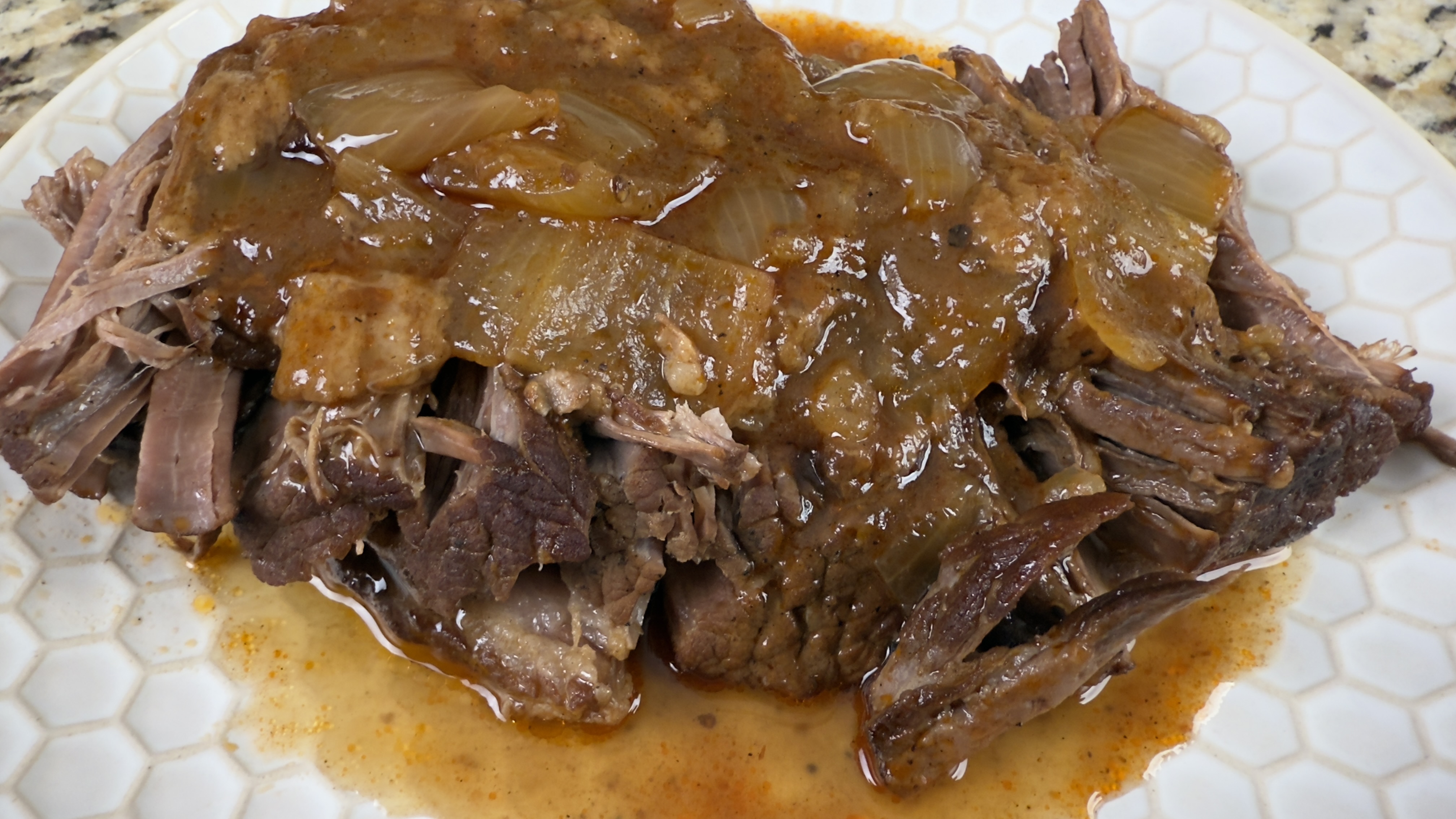
Draadjesvlees: Dutch Slow-Cooked Beef Stew Like My Oma Made
Ingredients

Equipment
Method
- Make sure you let your brisket come to room temperature for at least 45 minutes.
- Rough chop the onions
- Cut the rye bread into small cubes. I remove the crust also.
- In the Netherlands, my grandma used to use “sukadelappen” which are “brisket steaks.” That is not something I can easily find in the stores around us. So, I just buy a kilo of brisket flat, and cut it in a few rectangles.
- I like doing this in a cast-iron Dutch Oven. I have it over medium-high heat, add the butter and oil. My oma would use “Croma,” which is shortening, originally with animal fat, but eventually was made with vegetable oils, dried milk solids, salt, and other flavor enhancers. Once the butter and oil stops sputtering, and starts the brown slightly, add one or two pieces of the brisket, and let them sit to develop a nice brown color.
- Once it’s brown, flip them over, to brown the other side.When the other side is browned, take it out of the pan, and put the brisket on a plate.
- Continue to brown the other pieces of brisket.
- Preheat your oven to 95ºC (205F)
- Once you have browned all the meat, lower the heat a little bit, and add the onions and tomato paste, and fry it up until the onions are turning glassy.
- Add the beef stock, and scrape all the fond off the bottom of the pan.
- Add the species, vinegar, honey, and bay leaves.
- Bring the stock to a boil, and turn off the heat. Stir in the rye bread, and add your brisket.
- Cover, and put it in the oven for at least 3-4 hours. Check it from time to make sure there is still enough liquid. Feel free to add more beef stock if looks like the pan is getting to dry.

“Wow, this recipe brings back so many memories! My oma used to make draadjesvlees, but I never knew exactly how she did it. Your explanation is so clear, and I love the tip about using rye bread as a substitute for ontbijtkoek. Can’t wait to try this—thanks for sharing such a nostalgic and delicious recipe! ️”